

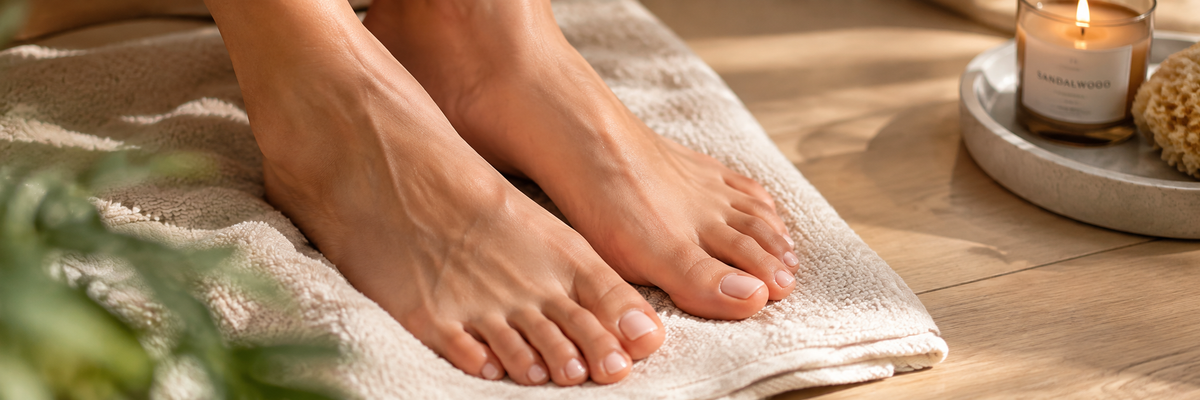
When feet need more attention than usual
For most people, foot care is a matter of comfort and wellbeing. For people with diabetes, it is much more than that: it is an important part of daily health care. Feet are particularly vulnerable in people with diabetes, and at the same time the part of the body that is often least in focus. Yet small wounds, untreated calluses or ingrown nails can lead to serious complications here that would resolve themselves in people without diabetes.
The good news is that with the right routine and the right products, a great deal of prevention is possible. Anyone who invests a few minutes in their feet every day can often stop problems from arising in the first place. This article gives an overview of why diabetic feet need such special attention, which mistakes are best avoided and which gentle routine really helps.
Important: This article does not replace medical advice. People with diabetes should always plan their foot care in consultation with their doctor or a specialist podiatrist.
Why people with diabetes need to keep a particularly close eye on their feet
Diabetes can change two things over time that are crucial for foot health: sensitivity and circulation. Both changes often happen gradually and initially go unnoticed. This makes it all the more important to be aware of them and to adapt daily foot care accordingly.
Diabetic neuropathy: when pain can no longer be felt
One of the most common secondary conditions in diabetes is diabetic neuropathy, a damage to the nerves that means those affected can no longer feel, or can only partially feel, pressure, heat, pain or small injuries to their feet. This may initially sound like a relief, but it is the opposite. Anyone who cannot feel pain may only notice a blister, a chafed area or a small wound once it has already become inflamed.

What is particularly insidious is that neuropathy does not always begin with a feeling of numbness. Many people first notice a tingling or burning sensation before sensitivity diminishes. Anyone who knows these signs and takes them seriously can act early.
Circulatory disorders: when wounds do not heal
Diabetes can impair circulation over time, especially in the small vessels of the legs and feet. This has direct consequences for wound healing: wounds heal more slowly, the skin becomes drier and more vulnerable, and the immune system responds more weakly to infections. What heals in a few days in a person without diabetes can become a weeks-long problem for a person with diabetes that requires medical treatment.
Regular movement, drinking enough fluids and wearing well-fitting footwear can support circulation. But here too: when in doubt, always ask a doctor which measures make sense for your individual situation.
Increased risk of infection
The combination of reduced pain perception and slower wound healing makes infections a serious risk. Even small injuries, for example a cut when cutting nails or a chafed area from ill-fitting shoes, can spread quickly when circulation is poor and the immune system is weakened. In the worst case, this can lead to the so-called diabetic foot, a serious complication that requires intensive medical treatment and in severe cases cannot simply be reversed.
This sounds serious, and it is. At the same time, experience shows that consistent daily foot care makes a big difference. Most complications do not develop overnight, but over a longer period during which small problems go unnoticed or are not taken seriously enough.
What people with diabetes should avoid in foot care
Many classic foot care methods that are completely unproblematic for people without diabetes carry risks for people with diabetes. These are the most important things to avoid.
Sharp instruments and blades
Callus shavers, razor blades or sharp nail scissors can quickly cause small injuries in people with diabetes that go unnoticed and then become inflamed. Precisely because of neuropathy, one often does not notice when one has cut too deep or injured the skin. Anyone who then continues to file or rub can quickly turn a harmless spot into an open wound. It is better to switch to gentler methods that involve no risk of injury at all.

Hot water and heat sources
Hot foot baths, hot water bottles or heating pads can cause burns in people with reduced pain perception that are only noticed once the skin is already damaged. Lukewarm is therefore always the safer choice. The temperature should always be checked beforehand with the elbow or a thermometer, not with the foot. Many people with diabetes have unknowingly burned themselves in exactly this way because the water was too hot and the foot no longer sent a signal.
Aggressive products and chemicals
Strong callus removers with high acid concentrations, aggressive peels or heavily fragranced products can irritate the already more sensitive skin of people with diabetes and damage its protective barrier. Anyone who wants to treat calluses is better placed to use products that work gently and are suitable specifically for sensitive skin. Natural active ingredients such as urea are a tried and tested, well-tolerated option.
Walking barefoot
For people without diabetes, walking barefoot is often considered beneficial because it strengthens the foot muscles and improves body awareness. For people with diabetes, however, it carries a real risk. A small stone, a sharp edge, a nail on the floor or a hot surface in summer can cause injuries that are not felt and therefore not treated. Well-fitting footwear with soft inner structures and without pressing seams is therefore always the better choice, even indoors.
Treating ingrown nails yourself
Ingrown nails are not uncommon in people with diabetes because dry skin and an altered nail structure increase the risk. Anyone who tries to remove an ingrown nail themselves risks injuries and inflammations that can become more serious more quickly in people with diabetes. This should generally be left to a specialist podiatrist who has the tools and knowledge to proceed safely.
The right daily routine: gentle, consistent, attentive
A good foot routine for people with diabetes does not have to be elaborate, but it does need to happen every day. The aim is to identify problems early, keep the skin supple and avoid injuries. Anyone who has built up these habits can get through it in a few minutes a day.
Daily inspection: the single most important habit
Looking at the feet carefully every day is the most important thing a person with diabetes can do for their foot health. That means: inspecting the spaces between the toes, the soles of the feet, the heels and the nails under good lighting. Anyone who has difficulty seeing the sole of the foot can use a hand mirror or a smartphone camera. Things to look out for: redness, swelling, blisters, small wounds, discolouration of the nails, skin cracks or changed areas of skin. Anything that seems unusual should be discussed with a doctor or podiatrist promptly, even if it initially seems harmless.
Gentle cleansing with lukewarm water
Washing daily with lukewarm water and mild soap is the first step in any good foot routine. The water temperature should never be tested with the foot, but with the elbow or a thermometer. After washing, dry the feet gently, especially between the toes, because that is exactly where fungal infections can develop easily if moisture remains. A soft towel and careful dabbing rather than rubbing protects the skin additionally.
Treating calluses gently without risk of injury
Calluses are a particularly delicate subject for people with diabetes. On the one hand they develop more easily because the skin is drier and produces less natural moisture. On the other hand, the classic treatment with callus shavers or rasps carries a real risk of injury, especially when sensitivity is reduced and one does not notice when going too deep.
MR. FUSS TIP: Anyone who wants to reduce calluses gently has two safe options at Mr. Fuss, depending on personal preference.
The Active Solution No. 4 softens dead callus in just a few minutes, so that it can be removed completely without mechanical pressure. No filing, no rasping, no risk of injury. The callus scraper made of surgical steel, Classic version, complements the application perfectly: it is deliberately kept blunt and designed to wipe away softened callus without injuring the skin. That makes it significantly safer than sharp blades or shavers that cut rather than wipe.
 Anyone who wants to do without a solution entirely and reduce calluses exclusively through care will find a tried and tested alternative in the 30HS foot cream with 30% urea. At this high concentration, urea has the property of breaking down horn cells and smoothing the skin gently from the outside, completely without mechanical treatment and therefore without any risk of injury.

Intensive moisture care every day
Diabetic skin tends to dryness, especially on the heels and soles of the feet. Daily moisturising after washing is therefore not an optional measure but a fixed part of prevention. Dry skin cracks more easily, and even fine cracks can be entry points for bacteria in people with diabetes. A good foot cream keeps the skin supple, prevents cracks and strengthens the natural protective barrier.
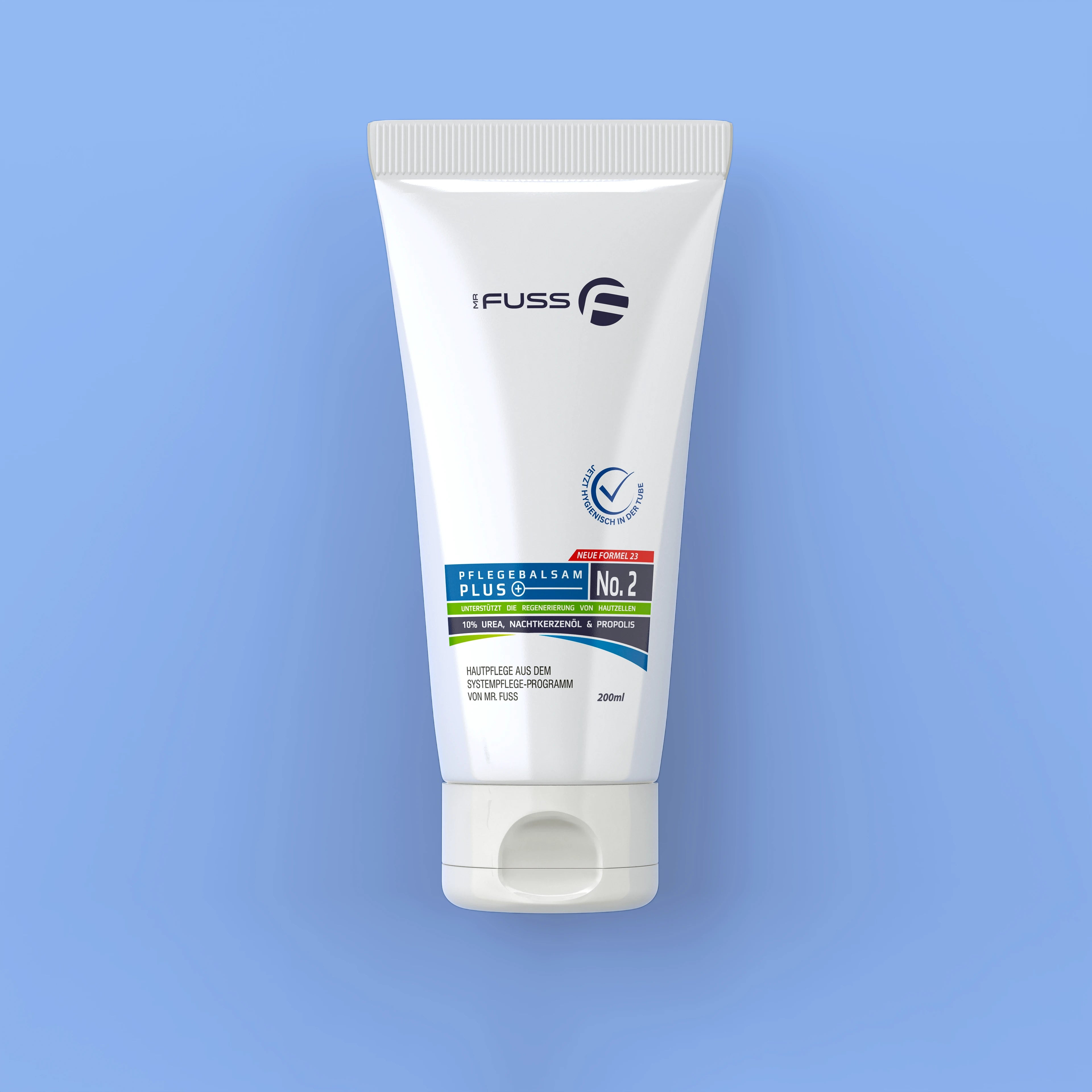
MR. FUSS TIP: The Care Balm Plus No. 2 with 10% urea, propolis and evening primrose oil was developed specifically for stressed, callus-prone skin. It absorbs quickly, provides deep nourishment and supports the skin in protection and regeneration. Propolis also has natural antimicrobial properties, which makes it particularly interesting for skin that is more susceptible to infections. The cream is ideal as a daily final step after washing and drying.

Cutting nails correctly
Nails should be cut straight, never too short and never rounded at the sides. Straight-cut nails are less likely to grow into the skin, which significantly reduces the risk of infection. The length should be chosen so that the nail protrudes slightly beyond the tip of the toe without being so long that it rubs against the shoe. Anyone who is unsure how to do this, or who already has ingrown nails, should leave this task to a podiatrist.
Choosing the right footwear
Well-fitting footwear is not a matter of aesthetics for people with diabetes, but of health. Shoes should be wide enough so that the toes are not squeezed, have soft insoles and ideally no hard seams on the inside. Before putting on shoes, one should briefly feel inside each shoe to check for any foreign objects. A small stone or a folded insole can cause unnoticed damage for days in people with reduced sensitivity, without one feeling it.
When to see a doctor or podiatrist without delay
With diabetes, the rule is: when in doubt, it is always better to see a doctor once too often than once too rarely. Any open wound, blister or skin injury should be seen by a professional promptly, even if it seems harmless. The same applies to redness, swelling or warmth in a particular area, to discoloured or thickened nails, to feelings of numbness, tingling or burning, to wounds that do not heal within a few days, and to fungal infections between the toes.
Regular visits to a specialist podiatrist are part of routine care for many people with diabetes and are covered by health insurance in certain cases. A podiatric practice specialising in diabetic feet can not only treat but also advise on building a safe care routine.
Conclusion: consistency protects
Diabetic foot care is not a great deal of effort, but it requires consistency and attention. Anyone who invests a few minutes in their feet every day is actively doing something to ensure that small problems do not become big ones. Daily inspection, gentle cleansing, regular moisture care with the Care Balm Plus No. 2 and gentle callus treatment, either with the Active Solution No. 4 and the callus scraper made of surgical steel, or purely through care with the 30HS foot cream with 30% urea, together form a routine that really makes a difference.

And anyone who regularly visits their podiatrist is even better placed. Because the combination of professional care and daily personal responsibility is the best protection one can give one's feet.
Note: This article is for general information purposes only and does not replace medical or podiatric advice. People with diabetes should always plan their foot care routine in consultation with their treating doctor or a specialist podiatrist.



Share:
Hands in Constant Use: How to Care for Heavily Used Hands