


Sound familiar? Outside it's freezing, inside the heating is running full blast, and your feet spend all day in thick socks and lined boots. Cosy, no question. But when you take your socks off in the evening, a little surprise is often waiting: dry, tight skin, rough heels and maybe even the first fine cracks.
Don't worry, your feet aren't sulking, they just need a bit more attention in winter. In this post you'll find out why the cold season is real hard work for your feet, what happens to your calluses in winter, which mistakes almost everyone makes and which simple routine keeps your feet soft and healthy all winter long. On top of that, you'll get tips for special situations, from running in the snow to a trip to the sauna, plus answers to the most common questions.
Why do our feet suffer so much in winter?
The skin on your feet is a special case: the soles have practically no sebaceous glands. While the skin on your face or back protects itself with its own oils, the soles of your feet depend on holding on to moisture. In summer, higher humidity helps with that. In winter, however, several opponents team up at once.
- Heated air: In heated rooms, humidity often drops below 30 percent. Your skin constantly loses moisture to its surroundings without you even noticing.
- Cold outside: At low temperatures, blood vessels contract so the body can save heat. As a result, your feet and toes get less blood flow and fewer nutrients.
- Thick socks and boots: They keep you warm, but they also create a warm, damp climate. The constant switch between sweating in your boots and dry indoor air puts strain on the skin barrier, a bit like a jumper that gets washed too often.
- Less attention: Let's be honest, hardly anyone sees your feet in winter. Foot care quickly slips to the bottom of the to-do list, and that's exactly when your feet start speaking up.
The result: your skin loses its elasticity, calluses get thicker and more brittle, heels crack, and in the worst case every step hurts a little. High time to do something about it.
Calluses in winter: friend or foe?
Calluses have a bad reputation, yet they're actually a clever protective mechanism. Wherever your foot takes a lot of pressure and friction, at the heel, the ball of the foot and the side of the big toe, the top layer of skin thickens. This creates a natural cushion that protects the sensitive skin underneath.
The problem starts when this layer gets too thick and dries out. Healthy callused skin is elastic and gives a little with every step. Dry callused skin, on the other hand, becomes as hard as old leather. It can no longer follow the movements of your foot and eventually cracks. That's exactly how the typical heel cracks develop that are so common in winter and that, in the worst case, can hurt or become inflamed.
So the trick isn't to radically sand calluses away. The goal is to gently reduce excess callus and keep the rest soft and supple. Two proven helpers do just that: urea is a moisture binder that your skin produces itself. In higher concentrations it has a keratolytic effect, which means it softens hardened skin and gradually dissolves it. Salicylic acid helps loosen the bonds between dead skin cells. Both work through regular care, without any sharp tools.
The winter routine for your feet
The good news: you don't need an elaborate spa programme. A few minutes in the evening are plenty, as long as you stick with it. Here's our suggestion for your winter routine.
- A warm foot bath, but not too hot: A foot bath at around 35 to 37 degrees softens the skin and is the perfect start. With the BANIOU foot bath it becomes a little time-out: the natural herbal essences are refreshing and soothing and soften the skin, ideal as preparation for callus care. Ten minutes is enough, then dry your feet thoroughly, including between the toes.
- Care for calluses instead of removing them radically: Apply a callus balm or a urea cream to the hardened areas on your heels and the balls of your feet. If you also want to work on them mechanically, do it gently and only on dry skin, never until it stings.
- Moisturise your whole foot generously: Now comes the most important step: a rich cream that binds moisture and supplies your skin with lipids. Ideally in the evening, so it can soak in overnight.
- Socks on and off to bed: A pair of thin cotton socks over freshly moisturised skin works like a little care mask. The next morning, your feet will feel noticeably softer.
Our tip: make it a fixed ritual, for example every evening with your favourite podcast or series. You don't need a foot bath every day, two to three times a week is enough. Moisturising, on the other hand, is welcome every evening in winter.

The right care: what your winter feet need now
Not every cream is the same. Depending on how your feet are doing, they might need a little more or something more targeted. These three care products cover the typical winter problems.
For every evening: the Alpengarten Foot Butter
If your feet are simply dry and stressed, the Alpengarten Foot Butter is your perfect evening companion. It's an intensive treatment with real deep-acting care, made by a cosmetics manufacturer at the edge of the Alps. Rich shea butter forms the base and provides intensive deep care. Urea supports moisture retention, vitamin E protects and nourishes, and essential oils and camphor create a fresh, invigorating feeling. Like a walk in the mountain air, just for the soles of your feet, and no ski lift required.
For stubborn calluses: the Alpengarten Callus Balm
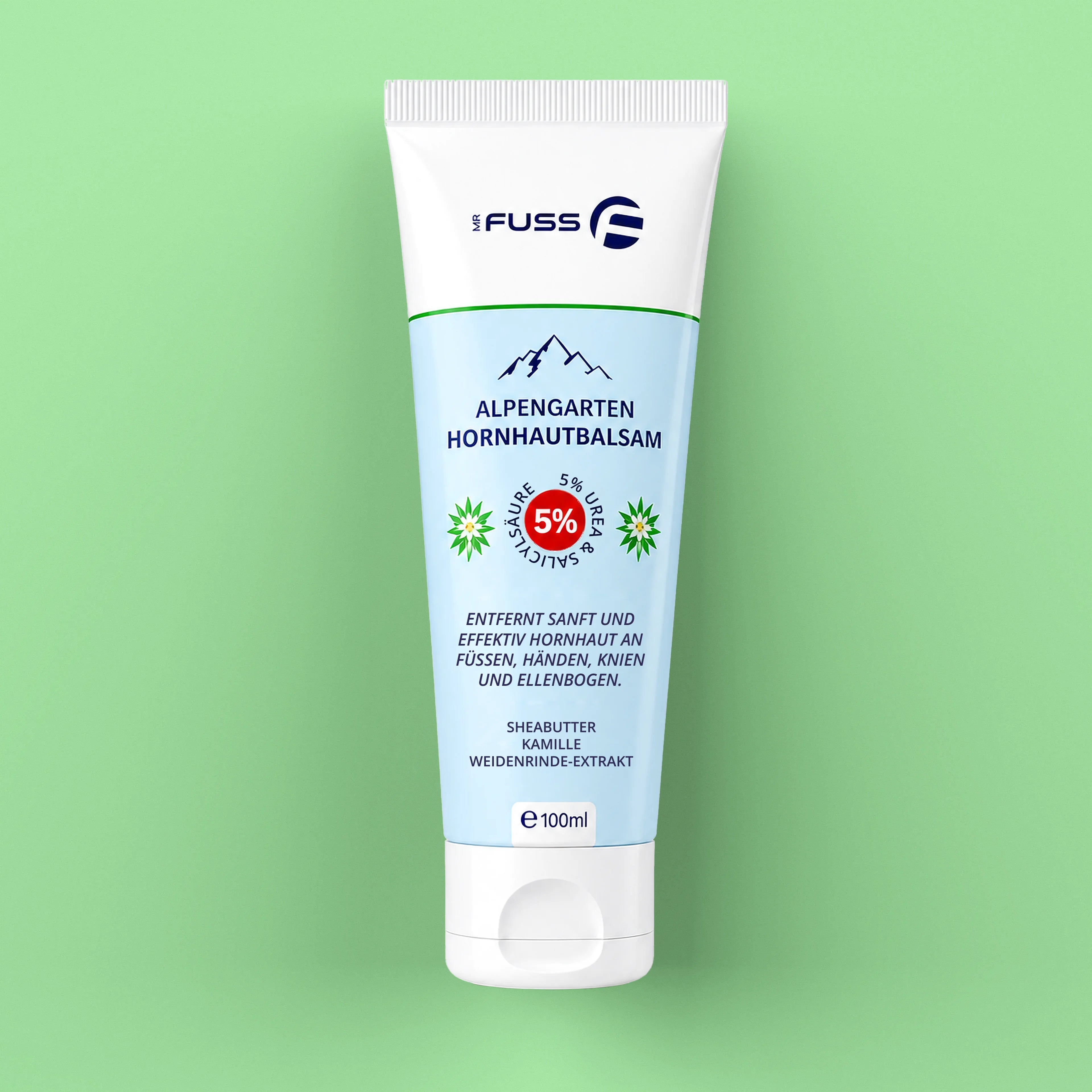
If thick layers of callus have built up on your heels and the balls of your feet, the Alpengarten Callus Balm is the right choice. It combines 5% urea and salicylic acid, two proven active ingredients that gently soften and dissolve calluses with regular use. On top of that come caring ingredients: shea butter for supple skin, chamomile and willow bark extract. The motto: care calluses away rather than sanding them off. Handy in winter: the balm is also suitable for hands and elbows, which often suffer just as much from heated air.
Our combo tip: in the evening, apply the balm specifically to the callused areas and pamper the rest of your foot with the foot butter.

For very dry, callused feet: the 30HS Foot Cream
For everyone for whom normal creams just aren't enough, there's the 30HS Foot Cream. 30% urea is no small matter. With such a high urea content, the cream has a keratolytic effect: with regular use it softens calluses and gently dissolves them, without sanding and without rubbing. The formula is rounded off with evening primrose oil and propolis for all-round care that doesn't just work, but also nourishes. Ideal for very dry, heavily callused feet and rough heels that love to crack in winter. And at 200 ml, it lasts for a long, consistent course of care, which is exactly what winter calls for.

The 5 most common winter foot care mistakes
- Bathing too hot: A hot foot bath feels wonderful on cold days, but it dries your skin out even faster. Lukewarm is the better choice.
- Shaving off calluses radically: If you remove too much, you take away your foot's natural protection. The skin often responds with even more callus. Better to care for it regularly and gently.
- Only moisturising in summer: Nobody sees your feet in winter, so people skimp. Yet care is most important right now.
- Keeping wet socks on: After slush or a long day in boots, damp skin softens and becomes vulnerable. So change your socks as soon as they get damp.
- Applying cream between the toes: Sounds especially thorough, but it promotes a damp climate in which fungi feel right at home. Better to keep the spaces between your toes dry.
Special cases: sport, standing jobs and sauna
Winter sports and running
Whether skiing, winter hiking or jogging in the park: during exercise your feet sweat a lot in warm shoes, and afterwards they cool down quickly. Put on dry socks as soon as possible after your workout and give your feet an extra portion of care in the evening. Performance socks that wick moisture away help prevent blisters and softened skin.
Long days on your feet
If you work in retail, healthcare or hospitality, you know the feeling: after eight hours on your feet, they're tired, and constant pressure makes calluses build up faster on your heels and the balls of your feet. This is where a combination of callus balm in the evening and well-cushioned shoes pays off. Putting your feet up for a few minutes after work does them good too.
After the sauna
For many people, the sauna is a fixed winter ritual. But heat and sweat draw a lot of moisture from the skin. Afterwards, your skin is nicely warmed through and receptive, the perfect moment for rich care like the foot butter. And remember to wear flip-flops in the sauna area, so you take home nothing but relaxation.

Small winter tips with a big effect
- Air out instead of overheating: Regularly opening the windows wide for a few minutes and placing a bowl of water on the radiator improve the indoor climate, for your skin and your wellbeing.
- Choose breathable socks: Wool or cotton are usually better than synthetic fibres because they regulate moisture better.
- Let shoes dry properly: Ideally, alternate between two pairs of winter shoes so each pair gets a day off.
- Drink enough: Your skin needs moisture from the inside in winter too, and tea counts, of course.
- Plan barefoot moments: A few minutes without socks on the carpet let your skin breathe and your feet move freely.
Frequently asked questions (FAQ)
How often should I moisturise my feet in winter?
Ideally every day, preferably in the evening. If your skin is very dry, you can also apply a small amount in the morning and let it soak in well before slipping into your socks.
Which urea concentration is right for me?
For daily care of dry skin, lower concentrations are enough. For stubborn calluses and rough heels, higher concentrations like the 30% in 30HS really show their strengths. Urea can sting briefly on cracked or irritated areas, in which case it's better to start with a milder product.
Does it help to wear socks overnight?
Yes. Thin cotton socks over moisturised skin keep the cream where it belongs and protect your bed linen at the same time.
When should I see a doctor about cracked heels?
If cracks are deep, bleed, become inflamed or don't improve despite care. People with diabetes or circulatory problems should always have changes to their feet checked early.
Conclusion: cosily wrapped up and still well cared for
Thick socks, warm boots and cosy heated air are simply part of winter, and that's fine. With a few minutes of care in the evening, the right active ingredients and a little attention, you can make sure your feet don't just survive the cold season but feel truly comfortable. Stick with it now and you'll start sandal season in spring with soft, healthy feet. Your feet carry you all winter, so give them something back!
By the way
For perfect winter care, here's the best combination: two to three times a week a BANIOU foot bath, the Alpengarten Foot Butter for your whole foot in the evening, the Alpengarten Callus Balm on rough spots as well, and the 30HS Foot Cream for very dry, heavily callused heels. That way you have the right care for every winter problem.
Note: These care tips are no substitute for medical treatment. Deep, bleeding or inflamed cracks and persistent complaints should be checked by a doctor or a medical podiatrist. This applies especially to people with diabetes or circulatory problems.



Share:
Diabetic Foot Care – What You Need to Pay Special Attention To