

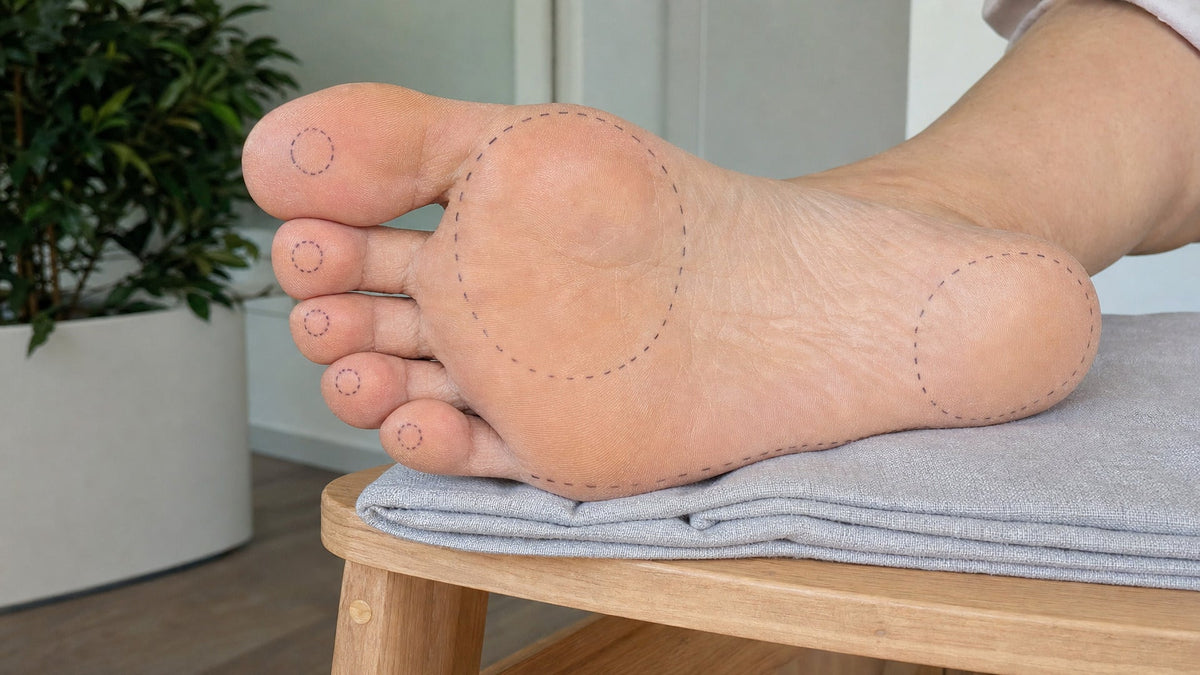
Sound familiar? You look at your feet and think: why here of all places? On the heel, the ball of the foot, the side or between the toes, calluses don't just appear at random. They form where pressure, friction or dryness is strongest. That's exactly why the spot often tells you more than the thickness alone.
In this post you read your feet like a little map. You'll find out what the ball, heel, edge and toes typically mean, which everyday patterns sit behind them and how a clear routine helps you care for them in a targeted way, without filing everything away radically. If you want to go deeper into the basics, we already have the post Understanding and caring for calluses.
Why the spot tells you more than the thickness
Calluses are a protective mechanism. Where the skin is loaded again and again, the top layer thickens. That is useful at first. It becomes unpleasant when the spot gets hard, brittle or cracked and bothers you when you walk.
Many guides talk mainly about how to remove calluses. The more interesting question comes first: why right there? Shoes, everyday life and the way you walk leave patterns. A thick heel in someone who stands all day often has a different story from a rough patch under the ball in tight sneakers. If you know these patterns, you care more precisely and avoid the endless cycle of removing too much and watching it grow back quickly.
Important: a foot map is a self-check for everyday life, not a diagnosis. It helps you look closely and react more smartly. If you have pain, open spots or you're unsure, a professional assessment is still the better path.
How to read your foot map
Take five quiet minutes, ideally in the evening, when your feet have had a full day. Sit down, feet on the floor or in your lap, and look in good daylight or under a bright lamp:
- Where does the skin feel thicker or rougher when you stroke it with your thumb?
- Is there a spot that often presses, burns or feels warm in the shoe?
- Do the calluses sit more in the middle of the ball, at the back of the heel, on the outer or inner edge, or more on the toes?
- Is the skin rather dry and brittle, rather hard and firm, or a mix of both?
- Do the right and left side look similar, or does one foot have a clear favourite pattern?
Note the spots. A quick look at the shoes you wear also helps: where is the sole worn down? Where are the imprints in the insole? You don't need a diagnosis, just an overview. That becomes your personal foot map.
A practical tip: do the check once now and then again every few weeks. That way you see whether a spot calms down after care or whether the same point keeps coming back. That's exactly when it's worth looking at shoes, socks and everyday life.

The ball of the foot: often the shoes
Thick spots under the ball often point to shoes: too tight, too stiff, heels that are too high, or a sole that distributes pressure poorly. A lot of walking on hard ground also loads the ball. Typical is a rather round or oval field under the big-toe ball, sometimes further out towards the little toe.
Common patterns: new shoes that don't sit quite right yet; sneakers with a hard outsole; business shoes with little cushioning; or a job where you walk for hours and load the ball more when you roll off. Socks that are too thin and have no padding can also increase friction.
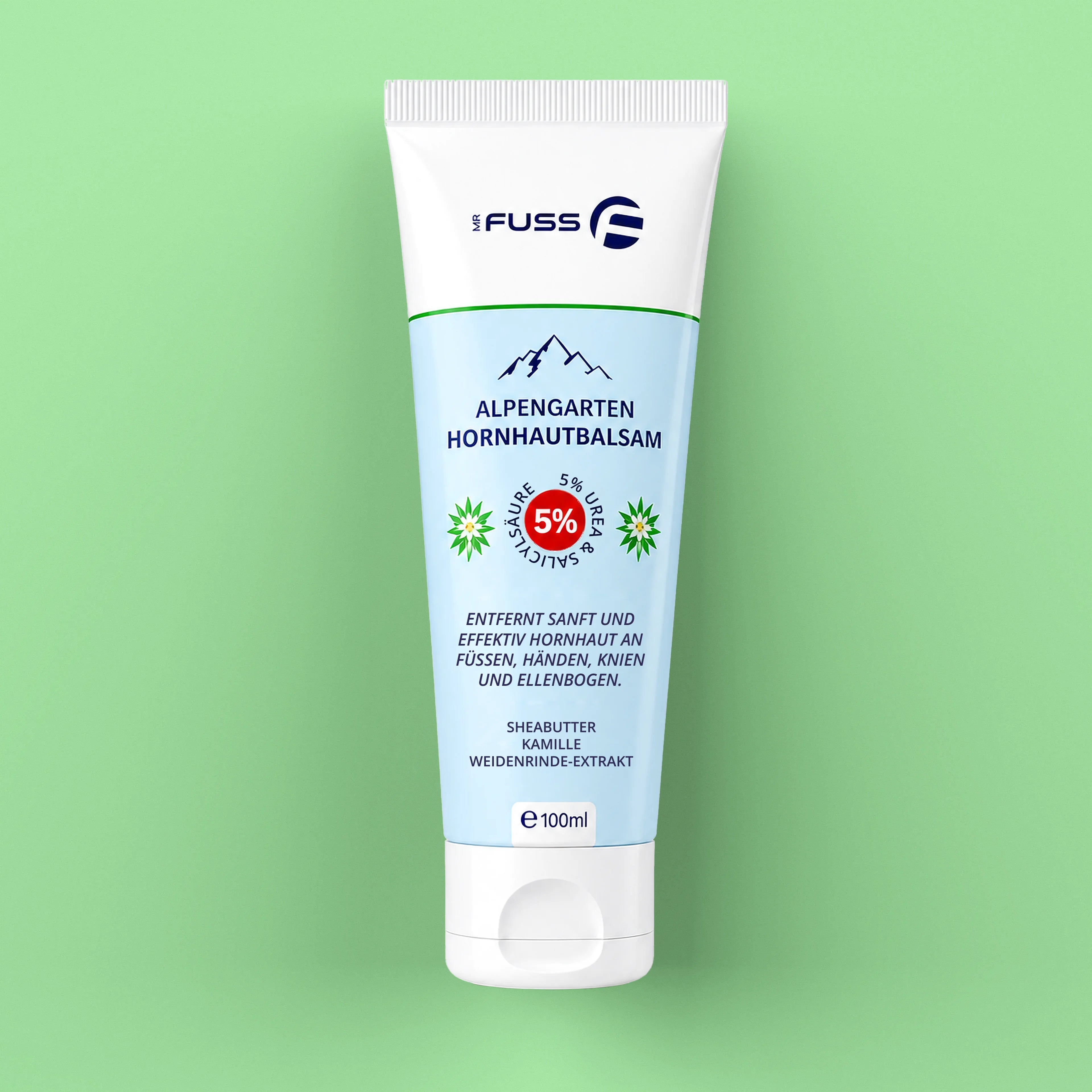
What helps preventively? Choose shoes with enough room for the toes and good cushioning, don't wear heels all day, and prefer socks without hard seams over the ball. For care of the spot the rule is: remove the large area gently, then care for it in a targeted way. For larger areas the Laser Callus File is a good fit. Afterwards the ball needs care, for example the Alpengarten Callus Balm or, on very hard skin, the 30HS Foot Cream with 30% Urea.
The heel: dryness or a lot of standing
On the heel, calluses often come from dryness, heated air or long days spent standing. The skin there has little of its own oil and quickly becomes brittle. Typical are rough edges, a ring-shaped field around the heel and sometimes fine cracks at the edge.
Common patterns: open heels in summer slides, long shifts behind a counter, winter with thick socks and dry indoor air, or simply moisturising too rarely. In winter you notice it especially. Our post Winter foot care fits that.
Prevention at the heel mainly means: give moisture regularly, choose shoes with a decent heel counter, and change socks as soon as they get damp. For care at the heel the rule is: remove the large area gently, then nourish it richly. The Laser Callus File for the surface, the Alpengarten Callus Balm for the hardened spots and the Alpengarten Foot Butter for the whole foot.

Outer and inner edge: gait and load
Calluses on the outer or inner edge of the foot often come from the way you step. Pronation, supination, uneven soles or one-sided load during sport can stress the edge more. Sometimes only one foot is affected, for example after an injury, unusual training or a pair of shoes that has worn down on one side.
Typical clues: the outer sole of your shoes is clearly more worn than the inside, or the other way around. The callus runs like a narrow strip along the edge. When you walk you feel friction there rather than broad pressure.
Here you need precision more than force. The Nano Glas Callus Remover File works well for edges and smaller spots. Afterwards keep the skin supple with the Alpengarten Foot Butter. Preventively, well-fitting shoes help, as does replacing worn soles in time and, in sports with a one-sided load, consciously training the other side too. If the edge keeps getting thick in the same place, it's worth looking at shoes and insoles in a specialist shop, without panic and without diagnosing yourself.
Toes and the side of the big toe: friction in the shoe
On the toes and on the side of the big toe, calluses often come from friction: a tight toe box, seams, folds in the sock, or a toe that slides forward when you walk downhill. Small spots, a lot of everyday annoyance. Sometimes you see a hard cap there rather than a large area.
Common triggers: shoes that are too short at the front; socks that slip and crease; trail or hiking shoes on longer descents; or a big toe that bumps slightly inside the shoe. Very stiff or lacquered shoes can also rub locally.
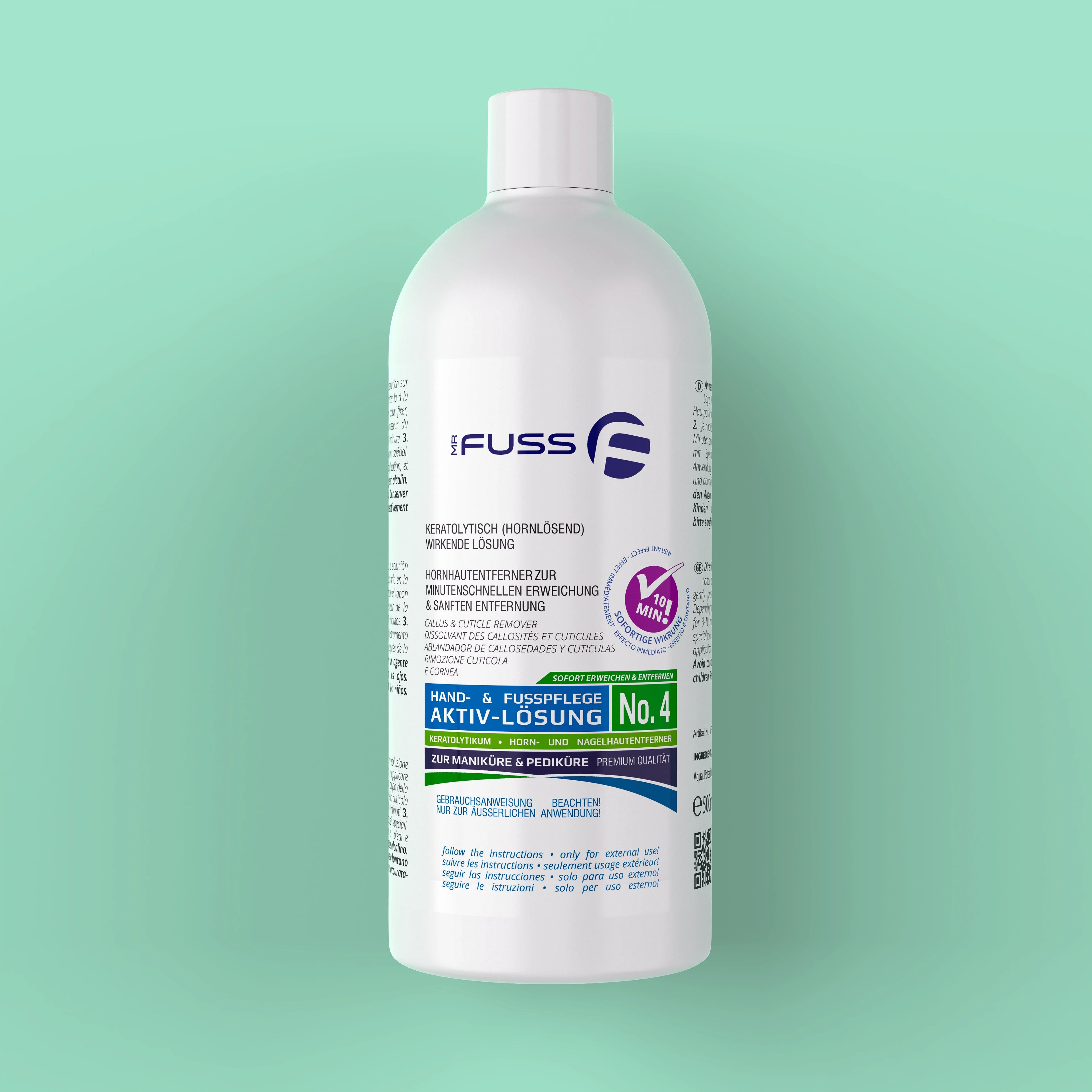
Prevention: enough room for the toes, socks without thick seams on the toe tips, and on long hikes adjusting the lacing so the foot doesn't slide forward. For these zones the Nano Glas file is the better choice than a large rasp. Before you remove anything, Active Solution No. 4 prepares the skin. That way you work more controlled and more gently on tightly limited spots.

The gentle answer, wherever the callus sits
Whether ball, heel, edge or toes: the method stays the same. Don't scrub it away radically, but prepare, remove and care in a targeted way. We also explain the exact sequence in Bye-bye dead skin. And if you still lean on home remedies, our post on home remedies for calluses shows why baking soda and pumice often only help for a short time.
- Apply the solution precisely: Take a piece of Natural Cosmetic Cotton, moisten it with Active Solution No. 4 and place it directly on the callused spot. The cotton stays in place and holds the solution exactly where it should work. Leave it to take effect briefly and follow the instructions on the pack.
- Remove the callus: Then take off the excess layer with the right instrument. For the ball and heel the Laser Callus File, for toes and edges the Nano Glas file. Always calmly and layer by layer, never until it stings.
- Care: Finally, nourish the skin. Alpengarten Callus Balm or 30HS on the stressed spots, Alpengarten Foot Butter for the whole foot.
Plan a relaxed ten to fifteen minutes for this. You don't have to do the full routine every day. Many people start with care in the evening and add the targeted removal once or twice a week, depending on how thick the spots are. If you'd rather have a complete start, the Starter Kit Excell is a practical box for system care.

When it's better to see a professional
This map is no substitute for medical advice. If you have deep cracks, pain, inflammation, numbness or open spots, you should see medical foot care or a doctor's practice. That applies especially if you have diabetes or circulation problems. We also have the post Diabetic foot care.
Even if a spot keeps growing back quickly and painfully despite suitable shoes and gentle care, a professional look is worthwhile. Sometimes there is more behind it than everyday life and friction, and then waiting is not a good strategy.
Frequently asked questions
Do I have to remove calluses completely?
No. A healthy amount protects. The goal is soft, controlled skin, not baby-soft at any price.
How often should I do the routine?
Care can be regular, for example in the evening on the stressed spots. Removal should be layer by layer and with some space in between, not aggressively on the same spot every day.
Why do the calluses always come back?
Because the trigger often stays: shoes, standing, dryness or the way you walk. That's why the map is worthwhile. Care alone is not enough if the pressure continues unchanged.
Which instrument for which spot?
Large areas such as the ball and heel: Laser Callus File. Small, precise spots on toes and edges: Nano Glas file. Before that, apply Active Solution No. 4 with cotton so it stays on the spot.
What do I do after removing it?
Always moisturise. Alpengarten Callus Balm or 30HS on the spot, Alpengarten Foot Butter for the rest of the foot. That way the skin stays more supple and copes better with the next pressure.
Conclusion: read the map, then care with purpose
Calluses are not a whim of nature. The ball often points to shoes, the heel to dryness or standing, the edge to load and gait, the toes to friction. If you understand the spot, you care more smartly and stop a small patch turning into a lasting nuisance.
Your short plan: find the spot, let Active Solution No. 4 work there with cotton, remove layer by layer with the Laser Callus File or the Nano Glas file, then Callus Balm, 30HS or Foot Butter. Keep an eye on shoes and socks as well. That way the map stays readable and your feet feel comfortable in everyday life.
By the way
You'll find all the products from this post in our shop, developed in Cologne, a Cologne original since 2002:
- Active Solution No. 4 - 500ml: apply precisely with cotton
- Natural Cosmetic Cotton - 25g: holds the solution on the spot
- Laser Callus File - Double-sided fine and coarse: for the ball and heel
- Nano Glas - 2 in 1 Callus Remover File: for toes and edges
- Mr. Fuss Alpengarten Callus Balm - 100ml: for hardened spots
- 30HS - Foot Cream with 30% Urea - 200ml: for very dry, hard calluses
- Mr. Fuss Alpengarten Foot Butter - 100ml: rich aftercare
- Starter Kit - Excell: system care to get started
Note: This post is no substitute for medical advice. If you have diabetes or circulation problems, or if your skin is injured, please seek medical advice before using foot-care products. If pain, swelling or skin changes persist, please get them checked.





Share:
Ski season and winter hiking: how to keep your feet fit in thick boots